

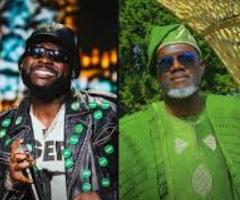
A disagreement that began over kidnapped schoolchildren has now grown into a public clash between two influential Nigerians.
What makes this story significant is that it goes beyond celebrity drama. At the center of the argument is a sensitive national issue: how public figures should use their platforms when speaking about insecurity, terrorism, and the plight of victims.
How the Dispute Escalated
Former presidential aide Reno Omokri has publicly responded to Afrobeats superstar Davido after the singer reportedly insulted him on social media.
The disagreement stems from Davido’s appearance at the FIFA World Cup countdown concert in Los Angeles, where he wore a customized jacket bearing the names of schoolchildren and teachers abducted in Oyo State, alongside the message “Bring Them Home.”
The gesture was widely praised by many Nigerians who viewed it as an effort to draw international attention to the victims’ situation.
However, Omokri criticized the move, arguing that highlighting terrorist activities on a major global platform could unintentionally give publicity to criminal groups.
Following the criticism, Davido reportedly reacted online with a post directed at Omokri, prompting the former presidential aide to release a lengthy response expressing disappointment over the language used against him.
While acknowledging that Davido’s intentions may have been noble, Omokri maintained that he disagreed with the strategy.
The debate raises an important question that extends beyond the individuals involved.
Should celebrities use international platforms to spotlight local security crises, or can such attention sometimes produce unintended consequences?
Supporters of Davido’s position argue that global awareness can put pressure on authorities and keep victims from being forgotten. They believe influential entertainers have a responsibility to use their reach to amplify important social issues.
Those who agree with Omokri’s argument believe that constant publicity surrounding terrorist acts may help spread fear, attract attention to criminal groups, and potentially complicate security operations.
The disagreement reflects a larger conversation about activism, celebrity influence, and the most effective ways to advocate for vulnerable communities.
Public Reaction
As expected, social media has been sharply divided.
Many Nigerians have rallied behind Davido, praising him for using his global platform to speak about the abducted children and keep public attention on their plight.
Others believe Omokri raises a legitimate concern about how sensitive security matters are communicated to international audiences.
The discussion has also sparked broader conversations about patriotism, public advocacy, and whether criticism of national challenges amounts to damaging the country’s image.
The next major development will likely be whether Davido responds again or chooses to let the matter end with Omokri’s statement. Public attention will also remain focused on the fate of the abducted schoolchildren, whose ordeal remains the issue at the heart of the controversy.
