

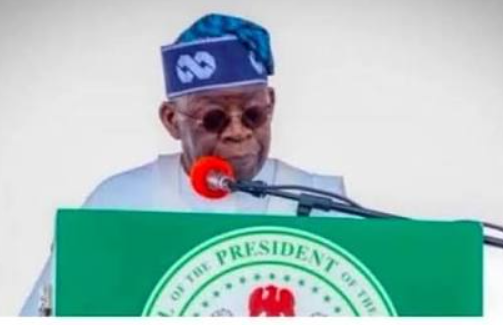
Millions of Nigerian families spend money every month to stay connected to news, football matches, movies and entertainment. That could soon change as the Federal Government moves to introduce a television service that promises access to more than 100 channels without subscription payments.
If the plan works as announced, households may have a new option for digital television at a time when many Nigerians are cutting back on expenses.
What Is Happening?
The Federal Government says it will officially launch FreeTV on Wednesday, June 17, 2026, as part of Nigeria’s ongoing Digital Switch-Over programme.
The platform is designed to give Nigerians free access to over 100 television channels, including national, regional and state stations.
Viewers are expected to enjoy a wide range of content, from news and sports to movies, music, children’s programmes and educational shows. Dedicated channels in Yoruba, Hausa and Igbo languages will also be available.
According to the government, the service will operate through satellite transmission, terrestrial broadcasting and a FreeTV mobile application. This means users in cities, rural communities and areas that missed earlier digital television pilot projects are expected to benefit.
Officials also say households will not need to buy new television sets. Existing televisions can still be used with compatible DVB-T2 or DVB-S2 decoders, while some homes with free-to-air decoders may already have the equipment needed.
A New Option for Families Feeling the Pinch
For many Nigerians, monthly television subscriptions have become another bill competing with food, transport and school expenses.
FreeTV could provide an alternative for families who want access to entertainment and information without paying recurring fees.
The government believes the initiative could also boost Nigeria’s creative industry. Plans are underway to establish production studios in Lagos, Abuja, Port Harcourt, Enugu, Kano and Benin City.
Officials say these centres are expected to create opportunities for filmmakers, editors, camera operators, sound engineers and other young professionals working in the media space.
The project is also part of Nigeria’s transition from analogue broadcasting to digital television, with the final analogue switch-off still scheduled for December 31, 2028.
Public Reaction
The announcement is likely to excite many Nigerians who are eager to reduce household expenses. Some social media users may welcome the idea of free television, while others will wait to see whether the promised channels and signal quality meet expectations.
Questions are also likely to emerge about decoder compatibility, content availability and how smoothly the service will operate nationwide.
The next major development to watch is the official rollout and whether viewers can easily access the channels immediately after launch.
